



Cost control for project margins helps Australian businesses protect profitability amid rising costs. By auditing expenses, improving efficiency, and involving teams, businesses can optimise spending without cutting quality, ensuring stronger margins and sustainable long‑term growth.
Get Smart with Cost Control: Strategies for Better Margins
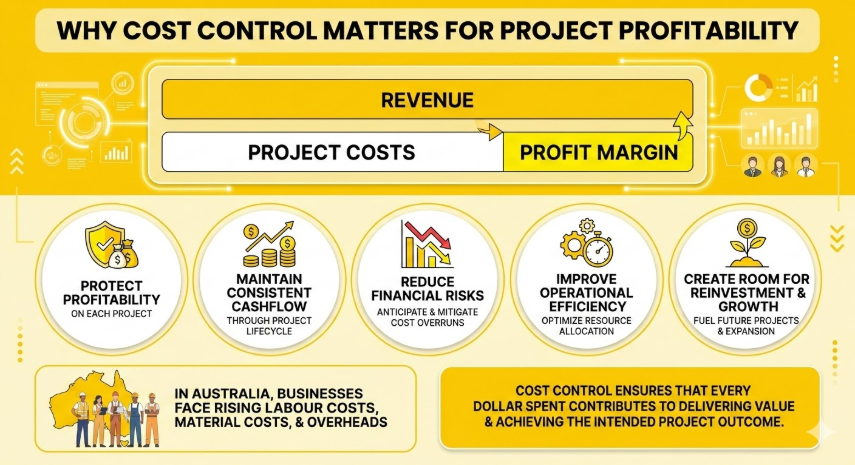
Across Australia, many businesses are preparing for tighter financial conditions and lower profit expectations. Rising operational costs, supply chain pressures, and ongoing economic uncertainty mean that maintaining healthy project margins is becoming more challenging. In this environment, cost control is no longer optional – it is essential.
For Australian businesses, particularly those managing projects in industries such as construction, consulting, professional services, and trade services, strong cost control practices can make the difference between a profitable project and one that erodes margins.
But cost control is not simply about cutting expenses. The most successful businesses treat it as a strategic process—one that helps optimise operations, strengthen cashflow, and ensure sustainable growth.
Here’s how better cost control can directly support stronger project margins and long-term financial stability.
Start with a Comprehensive Cost Control Audit
The first step to improving project margins is gaining a clear understanding of where your money is going.
A cost control audit involves reviewing all expenses associated with your operations and projects. This includes:
-
- Labour costs
-
- Materials and supplies
-
- Subcontractor expenses
-
- Software and systems
-
- Administrative overheads
-
- Equipment and asset costs
By analysing your financial data, you can identify patterns and determine which areas are consuming the most resources.
Many Australian businesses discover that small inefficiencies across multiple processes accumulate into significant costs. A cost control audit helps pinpoint these areas so that improvements can be made.
Once you understand your cost structure, you can develop strategies to optimise spending while maintaining quality and productivity.
Avoid Thoughtless Cost Cutting
When profits come under pressure, the instinct may be to cut costs quickly. However, indiscriminate cost cutting can cause more harm than good.
Reducing expenses without careful analysis can lead to:
-
- Lower service quality
-
- Reduced employee productivity
-
- Customer dissatisfaction
-
- Delays in project delivery
Instead of eliminating expenses blindly, businesses should focus on removing waste and improving efficiency.
For example:
-
- Automating repetitive administrative tasks
-
- Consolidating software subscriptions
-
- Improving resource allocation on projects
-
- Streamlining internal processes
Smart cost control focuses on optimisation rather than reduction. The goal is to achieve the same or better results while using fewer resources.
Involve Your Team in the Cost Control Process
Cost control should not be limited to management or finance teams. The most effective strategies often come from employees who are directly involved in day-to-day operations.
Your team members have valuable insights into:
-
- Inefficient workflows
-
- Wasted materials or resources
-
- Opportunities to improve productivity
-
- Tools or systems that could reduce costs
Encouraging staff to participate in cost control discussions can lead to innovative ideas and practical improvements.
Creating a culture of financial awareness also helps employees understand how their actions impact the business. When teams are aligned around efficiency and accountability, cost management becomes a shared responsibility rather than a top-down directive.
Benchmark Your Costs Against Industry Standards
Another powerful strategy for improving project margins is benchmarking your costs against similar businesses in your industry.
Benchmarking allows you to compare:
-
- Labour costs per project
-
- Material usage and procurement costs
-
- Operating expenses
-
- Project completion times
-
- Profit margins
If comparable businesses are achieving stronger margins while operating with lower costs, it may indicate opportunities to refine your own processes.
Benchmarking helps Australian businesses identify best practices within their sector and make informed adjustments to improve efficiency.
Industry associations, financial advisors, and accounting professionals often provide valuable benchmarking data that can support this analysis.
Building Stronger Margins for the Future
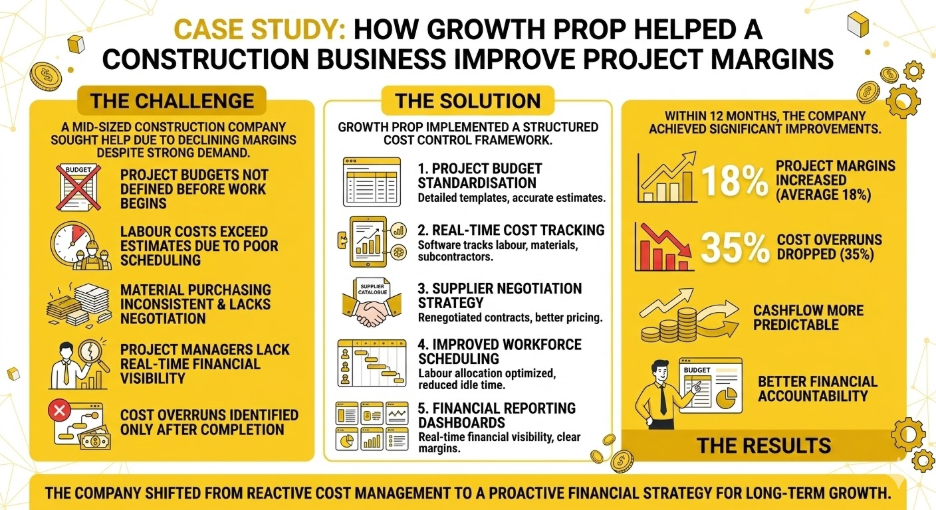
In today’s challenging economic environment, Australian businesses must take a proactive approach to managing costs and protecting project margins.
By conducting regular cost audits, involving teams in financial discussions, benchmarking against industry standards, and implementing stronger project monitoring systems, businesses can significantly improve their financial performance.
Cost control is not about restricting growth—it is about creating a more efficient and resilient business.
If you want to strengthen your project margins and gain better financial visibility, Growth Prop can help. Visit to learn how their experts support businesses with smarter financial strategies and scalable growth solutions.
Frequently Asked Questions
Q1: What is cost control in project management?
Cost control is the process of monitoring, managing, and optimising project expenses to ensure budgets are maintained and margins are protected.
Q2: Why is cost control important for Australian businesses?
Rising operational costs and economic uncertainty make cost control essential for protecting profitability and ensuring long‑term business sustainability.
Q3: How can businesses improve project margins without cutting quality?
By auditing costs, removing inefficiencies, improving workflows, and benchmarking performance rather than reducing essential resources.
Q4: How often should cost audits be conducted?
Most Australian businesses benefit from annual cost audits, with more frequent reviews for project‑based or fast‑growing organisations.

